

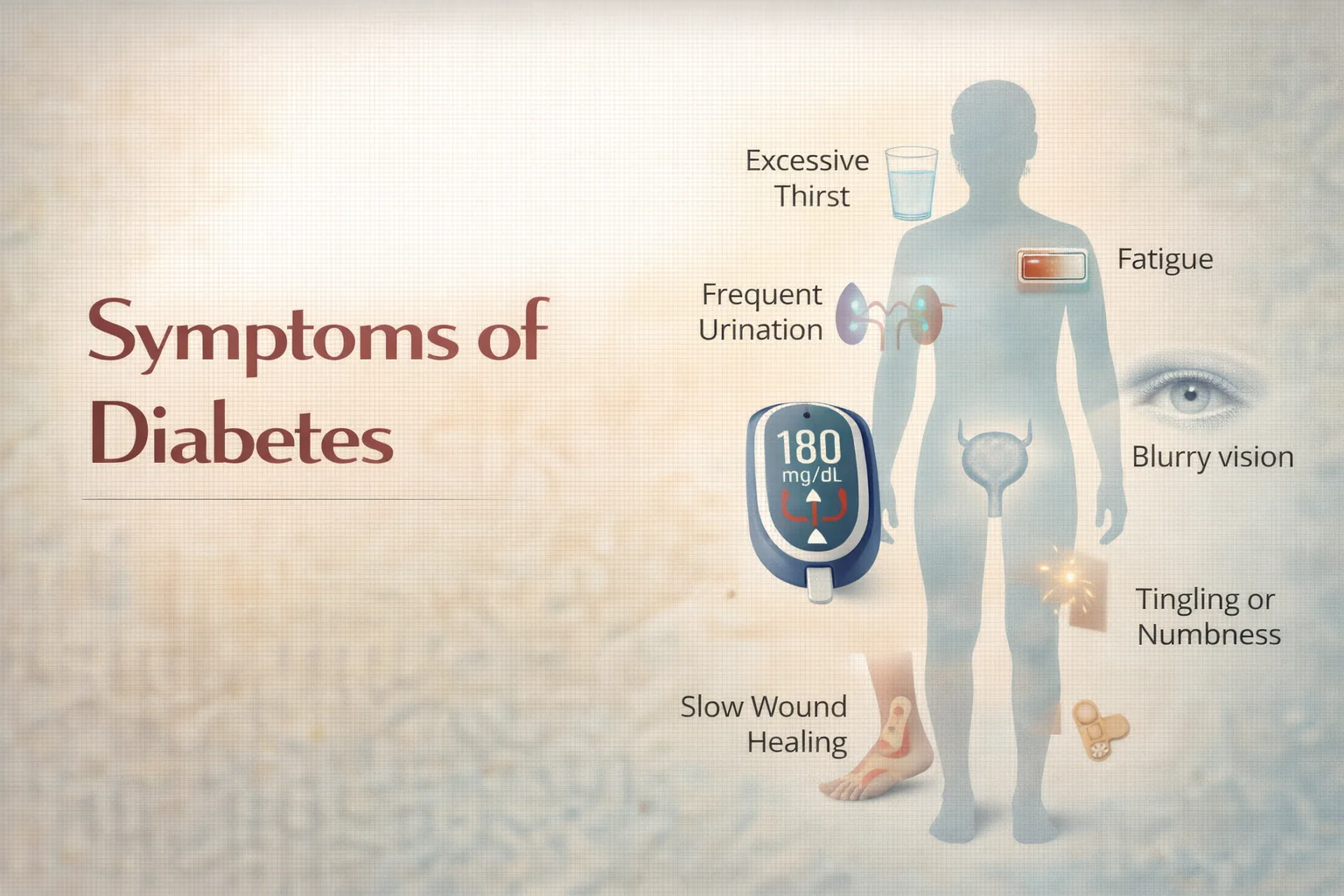
You wake up feeling tired even after a full night’s sleep. By mid-afternoon, you’re reaching for another cup of coffee just to stay focused. You’re drinking more water than usual, making extra trips to the bathroom, and wondering why your vision seems a little blurry after long days.
Individually, these changes may not seem alarming.
Together, they could be your body’s way of asking for attention.
Type 2 diabetes often develops gradually, sometimes over several years. Because the symptoms can appear slowly, many people mistake them for stress, aging, or a busy lifestyle. That’s one reason routine health checkups and early awareness are so important.
If you’ve noticed several of the signs below, it’s worth discussing them with your healthcare provider. Many conditions can cause similar symptoms, and only proper medical testing can determine the underlying cause.
1. You’re Always Thirsty
Everyone feels thirsty after exercising or spending time in hot weather.
But if you constantly feel the need to drink water—even when you haven’t been particularly active—it may be worth paying attention.
Higher-than-normal blood sugar levels can cause your body to lose more fluids, making you feel thirsty more often.
2. You’re Visiting the Bathroom More Often
Frequent urination often goes hand in hand with increased thirst.
As your body tries to remove excess glucose through urine, you may find yourself waking up during the night or needing restroom breaks more frequently throughout the day.
If this change is new and continues for several weeks, don’t ignore it.
3. Fatigue That Doesn’t Improve With Rest
Feeling tired after a busy week is completely normal.
Persistent fatigue, however, is different.
When your body has difficulty using glucose effectively for energy, you may feel unusually drained—even after getting enough sleep.
If everyday activities suddenly feel more exhausting than they used to, it’s worth mentioning during your next medical appointment.
4. Blurry Vision Comes and Goes
Many people assume blurry vision simply means they need new glasses.
In some cases, temporary changes in blood sugar levels can affect the shape of the eye’s lens, leading to changes in vision.
If your vision becomes blurry unexpectedly or repeatedly, schedule an eye exam and speak with your healthcare provider.
5. Cuts and Scrapes Take Longer to Heal
Minor cuts usually improve within a reasonable amount of time.
If small wounds seem unusually slow to heal or become infected easily, it’s something your doctor should know about.
Delayed healing can occur for several reasons, including uncontrolled blood sugar.
6. You Feel Hungry Soon After Eating
Have you ever finished a meal and still felt hungry an hour later?
Persistent hunger may occur because your body’s cells aren’t using glucose efficiently for energy.
This doesn’t automatically mean diabetes, but it can be one clue among several others.
7. Tingling or Numbness in Your Hands and Feet
Some people describe this feeling as “pins and needles.”
Occasional tingling can happen after sitting in one position for too long.
However, ongoing numbness or tingling—especially in the feet—should be evaluated by a healthcare professional.
8. Frequent Skin Infections or Itching
Recurring fungal infections, itchy skin, or skin irritation can sometimes be associated with elevated blood sugar levels.
Keeping your healthcare provider informed about recurring infections can help identify underlying causes.
9. Unexpected Weight Loss
Losing weight without changing your diet or exercise routine may seem like good news at first.
However, unexplained weight loss should always be discussed with a healthcare professional.
It can have many possible causes, including diabetes and other medical conditions.
10. Darkened Areas of Skin
Some people develop darker, velvety patches of skin around the neck, underarms, or groin.
This skin change, known medically as acanthosis nigricans, can sometimes be associated with insulin resistance.
If you notice new skin changes, schedule an evaluation rather than trying to treat them yourself.
11. More Frequent Infections
Does it seem like you’re catching every cold that goes around the office?
Or perhaps you’re experiencing frequent urinary tract or yeast infections.
Recurring infections don’t always point to diabetes, but they deserve medical attention—especially when combined with other symptoms.
12. You Have No Symptoms at All
Here’s something many people don’t realize.
Some adults with type 2 diabetes feel perfectly healthy.
They discover their condition only after routine blood work during an annual physical.
That’s why preventive care is so valuable, even when you feel well.
Could Your Risk Be Higher?
Certain factors increase the likelihood of developing type 2 diabetes.
Your risk may be higher if you:
- Are age 45 or older
- Have a close family member with diabetes
- Have overweight or obesity
- Are physically inactive
- Have high blood pressure
- Have high cholesterol
- Previously had gestational diabetes
- Have been told you have prediabetes
Having risk factors doesn’t mean you’ll develop diabetes, but it does mean regular screening may be especially important.
What Happens at the Doctor’s Office?
If your healthcare provider suspects diabetes or prediabetes, they may recommend simple blood tests, such as:
- Fasting blood glucose
- Hemoglobin A1C
- Oral glucose tolerance test (when appropriate)
These tests help determine how your body is managing blood sugar and whether additional evaluation or treatment is needed.
Don’t Wait for Every Symptom to Appear
One of the biggest misconceptions about diabetes is believing you need to experience every symptom before seeking medical advice.
That’s simply not true.
Even noticing one or two persistent changes—especially if you have known risk factors—is enough reason to schedule a conversation with your healthcare provider.
Early diagnosis allows people to better understand their health and discuss appropriate treatment and lifestyle options before complications develop.
Key Takeaway
Type 2 diabetes rarely announces itself with a single dramatic symptom. Instead, it often begins with small, everyday changes that are easy to dismiss. Increased thirst, ongoing fatigue, blurry vision, slow-healing cuts, and frequent urination may seem unrelated, but together they can paint an important picture.
The good news is that diabetes can often be identified through routine blood tests before serious complications occur. Paying attention to your body, keeping up with regular medical checkups, and discussing persistent symptoms with your healthcare provider are simple steps that can make a meaningful difference.
Sometimes, the earliest warning signs are also the easiest to overlook. Listening to your body today could help protect your health tomorrow.